![HR Logo [Recovered]_Full Color Vertical-1](https://blog.healthyroster.com/hs-fs/hubfs/HR%20Logo%20%5BRecovered%5D_Full%20Color%20Vertical-1.png?width=199&height=178&name=HR%20Logo%20%5BRecovered%5D_Full%20Color%20Vertical-1.png)
 By
By

New research involving Wisconsin high school athletes highlights just how much access to an Athletic Trainer can affect concussion care.
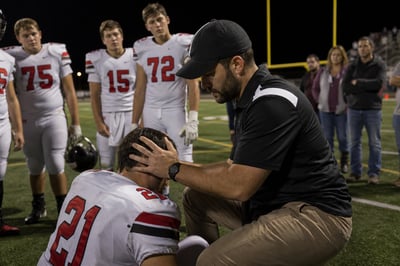 A University of Wisconsin-Madison study examined 2,459 student-athletes across 31 Wisconsin high schools and found a dramatic difference in how quickly athletes with suspected concussions were evaluated.
At schools with greater Athletic Trainer availability, athletes were evaluated in less than an hour on average. At schools with limited availability, the average wait was 24 hours.
That early evaluation can be important for identifying a suspected concussion, recognizing signs that may require more immediate medical attention, and beginning appropriate concussion management.
Ethan Natzke, an outreach Athletic Trainer with Emplify Health by Bellin, said having an Athletic Trainer available at every athletic event would be ideal, although staffing shortages and financial limitations can make that difficult.
“We’ve also seen the effects of untreated and mistreated concussion evaluations,” Natzke said. “So it’s important to have someone who’s trained in concussion management on your sideline if you can.”
The differences extended beyond the initial evaluation.
According to the research, only 50% of athletes at schools with low Athletic Trainer availability completed a return-to-play protocol following concussion. That increased to 94% at schools with mid-level availability and 100% at schools with high availability.
Return-to-play protocols allow activity to be gradually increased as an athlete recovers rather than immediately returning them to full competition.
The findings provide another reminder of the critical role Athletic Trainers play throughout concussion care — from recognizing and evaluating a potential injury to helping athletes safely progress through recovery.
“All concussions are serious,” Natzke said. “It’s your brain. It’s a brain injury. It’s a big deal.”